
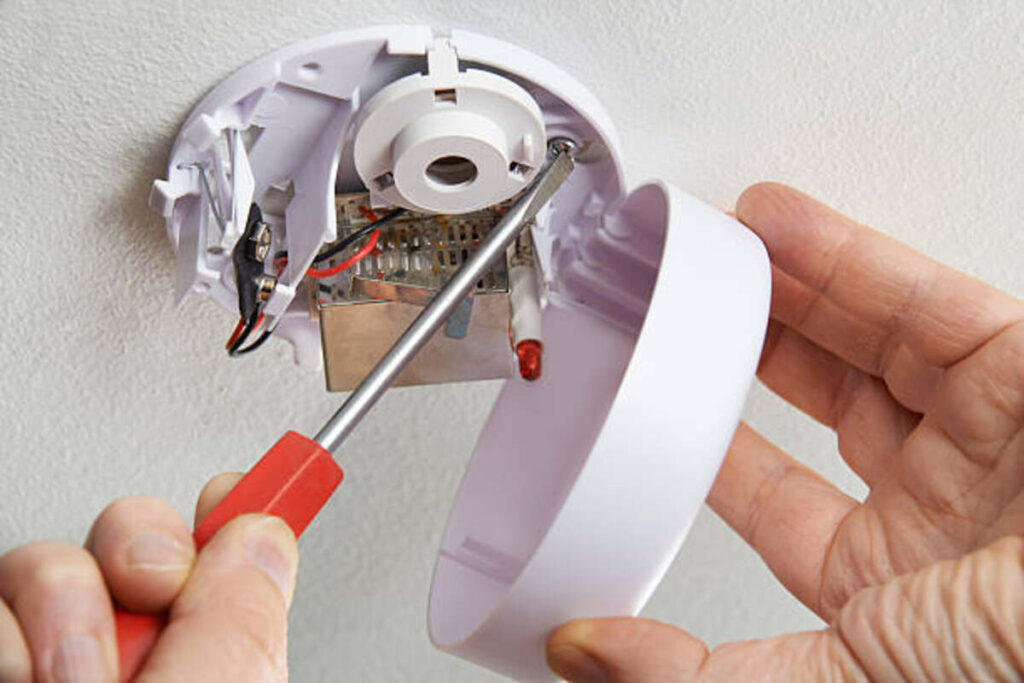
Fire alarm setup is one of those projects where “good enough” is not good enough. A device can look perfect on the wall, pass a quick button press, and still be in the wrong location, wired incorrectly, undocumented, or out of step with local requirements. Read the Best info about Fire Alarm Installation.
So let’s walk through it the right way: slowly, practically, and with safety first.
This tutorial is written for U.S. homeowners, property managers, facility teams, and business owners who want to understand what can go wrong during Fire Alarm Installation and how to prevent costly, dangerous mistakes. It is not a substitute for a licensed fire alarm contractor, electrician, fire protection engineer, or your local fire marshal. For hardwired systems, commercial buildings, multifamily properties, monitored systems, and any work that requires permits, bring in qualified professionals from the start.
A good fire alarm setup is not just about mounting devices. It is about creating a complete, code-aware life safety system that detects danger, alerts people, supports evacuation, and can be tested and maintained over time.
NFPA 72, the National Fire Alarm and Signaling Code, addresses topics such as documentation, circuits and pathways, initiating devices, notification appliances, protected premises systems, supervising station systems, and household signaling systems. That means a proper setup is bigger than “put a detector over there.” It includes design, installation, inspection, testing, and maintenance.
First, Know What You Are Actually Installing
Before we talk about mistakes, let’s clear up a common confusion.
People often use the phrase “fire alarm” to mean several different things:
- A battery-powered smoke alarm in a single-family home
- A hardwired interconnected smoke alarm system in a house or apartment
- A commercial fire alarm control panel with pull stations, horn-strobes, smoke detectors, heat detectors, duct detectors, sprinkler monitoring, and off-site monitoring
- A combination fire and carbon monoxide warning setup
- A broader life safety system tied to elevators, doors, HVAC shutdown, smoke control, or emergency communications
Those are not all the same thing.
A homeowner replacing a battery-powered smoke alarm is dealing with a very different scope than a building owner planning a full fire alarm system installation for a restaurant, school, office, hotel, warehouse, healthcare facility, or multifamily building.
Your first job is to define the project:
- What type of property is involved?
- Single-family home
- Duplex or townhome
- Apartment building
- Retail space
- Office
- Industrial or warehouse facility
- Assembly space
- School or childcare facility
- Healthcare or assisted living setting
- What type of alarm setup is needed?
- Standalone smoke alarms
- Interconnected household alarms
- Fire alarm control panel system
- Monitored system
- Fire sprinkler supervisory system
- Carbon monoxide alarms or detection
- Emergency voice communication
- Who must approve it?
- Building department
- Fire marshal
- Electrical inspector
- Insurance carrier
- Property owner or management company
- Authority Having Jurisdiction, often called the AHJ
The AHJ is the governmental body or official with authority to approve fire safety systems, equipment, installations, or procedures in a locality. In real life, that may be your fire marshal, building official, electrical inspector, or another designated authority.
The Safe Tutorial Path: How to Avoid Mistakes From the Start
Here is the mistake-proof workflow. Think of it as the “measure twice, install once” process for fire alarm setup.
Step 1: Confirm the Required Scope Before Buying Anything
Do not start with devices. Start with requirements.
A very common mistake is buying smoke alarms, pull stations, strobes, or control equipment before anyone has confirmed what the building actually needs. That often leads to missing devices, incompatible equipment, failed inspections, and rework.
For homes, start with basic placement guidance. The U.S. Fire Administration recommends smoke alarms inside every bedroom, outside each sleeping area, and on every level of the home, including the basement. It also recommends testing smoke alarms monthly and replacing the entire smoke alarm every 10 years.
For commercial buildings, do not assume. Requirements vary based on occupancy, building size, use, local adopted codes, existing conditions, and AHJ direction. The International Code Council’s I-Codes are widely used model codes in the United States, and local jurisdictions adopt and amend them in different ways.
Do this instead:
- Ask the AHJ what codes and editions apply.
- Find out whether permits are required.
- Confirm whether engineered drawings are required.
- Ask whether a licensed fire alarm contractor must perform the work.
- Confirm whether monitoring is required.
- Confirm whether the system must interface with sprinklers, elevators, HVAC, access control, smoke control, or emergency communication systems.
If you are managing a commercial or multifamily property, this is not the place to guess. Start with a code review and a professional design.
Step 2: Walk the Property Like a Fire Alarm Designer
Before installation begins, walk the building with fresh eyes.
You are looking for:
- Bedrooms and sleeping areas
- Exit paths
- Corridors
- Stairwells
- Basements
- Attics or mechanical spaces, where applicable
- Kitchens and cooking areas
- Bathrooms and shower areas
- Laundry rooms
- Garages
- Furnace rooms
- Electrical rooms
- Storage rooms
- High-ceiling areas
- Noisy areas
- Areas with occupants who may need visual notification or accessibility features
- Areas with dust, humidity, fumes, airflow, or temperature extremes
The goal is not to randomly “cover space.” The goal is to place the right device in the right environment for the right reason.
For example, a smoke alarm too close to a steamy bathroom may create nuisance alarms. A smoke detector in a dusty shop area may become contaminated. A horn-strobe hidden behind shelving may not effectively alert people. A pull station blocked by furniture may be hard to access.
Step 3: Match Devices to the Environment
Another classic mistake in alarm system installations is treating all devices as interchangeable.
They are not.
A smoke detector, heat detector, duct detector, pull station, waterflow switch, tamper switch, horn, strobe, speaker-strobe, relay module, and control panel all serve different purposes. Even devices that look similar may have different listings, compatibility requirements, sensitivity ranges, mounting rules, and environmental limitations.
For household smoke alarms, always follow the manufacturer’s instructions and use products appropriate for the location. For commercial systems, equipment should be listed for fire alarm use and compatible with the specific control panel and system design.
Do not:
- Mix devices from different systems unless compatibility is confirmed.
- Install indoor-only devices in damp, hot, cold, dusty, or corrosive areas.
- Use security alarm equipment as a substitute for fire alarm equipment.
- Replace a device with a “close enough” model.
- Assume a smart home device satisfies local fire alarm requirements.
Do:
- Use listed equipment.
- Verify control panel compatibility.
- Check manufacturer installation instructions.
- Keep model numbers and data sheets in the project file.
- Have a licensed professional select and install system components where required.
Step 4: Plan Device Locations Before Mounting
Bad placement is one of the most common fire alarm setup mistakes.
In homes, the basic smoke alarm concept is simple: protect sleeping areas and each level. In practice, people still miss bedrooms, skip basements, install too close to kitchens, or put alarms where airflow may delay smoke reaching the sensor.
For commercial fire alarm systems, placement is more technical. Device spacing, ceiling height, beam pockets, airflow, room geometry, ambient conditions, audibility, candela ratings, and occupant use can all matter. This is why professional design is so important.
Use this location planning checklist:
- Are all bedrooms or sleeping rooms addressed?
- Is there coverage outside each sleeping area?
- Is every level addressed, including basements where applicable?
- Are devices kept away from locations likely to cause nuisance alarms?
- Are notification appliances visible and audible where people need to be alerted?
- Are pull stations located where required and not blocked?
- Are devices accessible for testing and maintenance?
- Are ceiling features, beams, slopes, vents, fans, and partitions accounted for?
- Are special environments handled with the correct device type?
- Has the AHJ or design professional approved the layout where required?
The secret is to plan the layout on paper before drilling holes.
Step 5: Coordinate Wiring, Power, and Pathways Safely
This is where DIY confidence can become dangerous.
Fire alarm circuits are not ordinary convenience wiring. Hardwired alarms and fire alarm control systems must be installed in accordance with applicable electrical and fire alarm requirements. NFPA describes the National Electrical Code, NFPA 70, as a benchmark for safe electrical design and installation, helping protect people and property from electrical hazards.
If the project involves hardwired devices, panel circuits, control relays, low-voltage pathways, conduit, power supplies, battery backup, or connection to building systems, use licensed professionals where required.
Common wiring mistakes include:
- Using the wrong cable type
- Running cable in unapproved locations
- Failing to protect wiring from physical damage
- Overloading circuits
- Mixing power-limited and non-power-limited wiring incorrectly
- Failing to maintain circuit integrity where required
- Creating ground faults
- Mislabeling circuits
- Skipping battery calculations
- Ignoring voltage drop
- Leaving splices unsupported or undocumented
- Failing to coordinate with other trades
A clean installation is not just neat. It is traceable, serviceable, and testable.
Step 6: Install Without Blocking, Hiding, or Compromising Devices
Even a properly selected device can fail to do its job if the final installation blocks it.
Watch for these field mistakes:
- Smoke alarms hidden behind ceiling fans or decorative beams
- Strobes blocked by shelving, signs, displays, plants, or partitions
- Pull stations installed behind doors, furniture, or merchandise
- Devices painted over during renovation
- Protective dust covers left in place after construction
- Detectors installed before heavy dust-producing work is complete
- Devices mounted on unstable surfaces
- Devices installed where future access is difficult
Here is the Writing Guru rule: if a person cannot see it, hear it, reach it, test it, or maintain it, the setup probably needs another look.
Step 7: Test the Whole System, Not Just the Device
Pressing a test button is not the same as completing acceptance testing for a fire alarm system.
For a household smoke alarm, the test button is part of basic monthly maintenance. For a commercial system, inspection and testing should verify that initiating devices, notification appliances, control functions, power supplies, batteries, signals, supervisory conditions, trouble conditions, monitoring, and documentation line up with the approved design and applicable requirements.
OSHA states that workplace fire detection systems covered by its fire detection standard must be serviced, maintained, and tested by a qualified person, including cleaning and needed sensitivity adjustments.
Testing should answer questions like:
- Does every initiating device report correctly?
- Does every notification appliance operate as intended?
- Are signals received at the panel correctly?
- Are alarm, supervisory, and trouble signals distinguishable?
- Does monitoring receive signals where required?
- Do batteries and power supplies support the design requirements?
- Are relays and emergency control functions operating properly?
- Are labels accurate?
- Are as-built drawings updated?
- Has the AHJ inspection been scheduled and passed?
No shortcuts here. Testing is where hidden mistakes come into the light.
Step 8: Keep Records Like They Matter Because They Do
A fire alarm setup without documentation is a future headache.
Your records should make the system understandable to the next technician, inspector, owner, or facility manager.
Keep:
- Approved plans
- Permit records
- Equipment data sheets
- Manufacturer instructions
- Battery calculations, where applicable
- Voltage drop calculations, where applicable
- Sequence of operations
- As-built drawings
- Inspection reports
- Acceptance testing records
- Monitoring account details, where applicable
- Service history
- Deficiency reports
- Repair records
- Device replacement dates
NFPA 72 includes documentation and inspection, testing, and maintenance as major parts of the fire alarm system lifecycle, which reinforces the point that paperwork is not an afterthought.
Mistake 1: Skipping the Local Code Conversation
This mistake sits at the top because it creates so many others.
People often ask, “What does code require?” But in the United States, the better question is, “What does my local jurisdiction require for this specific building?”
Codes and standards provide the framework. Local adoption, amendments, building use, occupancy classification, permit history, renovations, and AHJ interpretation affect the actual project.
Why this mistake happens:
- Someone assumes national guidance is the final answer.
- A contractor copies a design from another city.
- A property owner buys equipment online first.
- Renovation work triggers requirements no one expected.
- The team waits until final inspection to involve the fire marshal.
How to avoid it:
- Identify the AHJ before design begins.
- Ask which adopted codes and editions apply.
- Confirm submittal requirements.
- Ask whether stamped drawings are required.
- Confirm licensing requirements for fire alarm work.
- Keep written notes from code-related conversations.
- Do not start installation until the required approvals are in place.
If that sounds slow, remember this: redoing a failed fire alarm setup is slower.
Mistake 2: Confusing Smoke Alarms With a Fire Alarm System
A smoke alarm is usually a self-contained device that detects smoke and sounds locally. A fire alarm system may include a control panel, initiating devices, notification appliances, supervision, standby power, monitoring, and integrated control functions.
The mistake happens when someone says, “We have smoke detectors, so we have a fire alarm system.” Maybe. Maybe not.
In a single-family home, interconnected smoke alarms may be the appropriate solution. In a commercial building, a full fire alarm system may be required depending on occupancy and local code. In a sprinklered building, supervisory monitoring may be required. In a hotel, apartment building, school, or assembly space, the requirements can be much more complex.
How to avoid it:
- Use the correct terminology.
- Confirm the required system type with the AHJ.
- Do not rely on consumer devices for commercial compliance unless specifically allowed.
- Ask a licensed fire alarm professional to evaluate the building.
This is one of the fastest ways to prevent a wrong-scope fire alarm system installation.
Mistake 3: Installing Too Few Devices
Under-installation is common in homes and small businesses.
In homes, missing bedroom alarms or basement alarms can leave people without early warning. The U.S. Fire Administration recommends smoke alarms in every bedroom, outside each sleeping area, and on every level, including the basement.
In commercial buildings, too few initiating devices or notification appliances can create detection, audibility, visibility, or inspection gaps.
Warning signs of under-coverage:
- One smoke alarm for an entire floor with multiple bedrooms
- No smoke alarm in the basement
- No alarm outside a sleeping area
- Horns that cannot be heard in offices, restrooms, mechanical rooms, or high-noise areas
- Strobes that are not visible in occupied spaces where required
- Pull stations missing from required locations
- No detection in areas where the approved design calls for it
Fix the mistake:
- Compare the installed devices to the approved plan.
- Walk the property room by room.
- Pay extra attention to sleeping areas, corridors, and changes in layout.
- For commercial systems, have a qualified professional verify device coverage.
Mistake 4: Placing Devices Where They Create Nuisance Alarms
A nuisance alarm is not just annoying. It can train people to ignore alarms.
Common nuisance alarm locations include:
- Too close to cooking appliances
- Too close to bathrooms with steam
- Near supply vents or strong airflow
- Near ceiling fans
- In dusty workshops
- In garages with vehicle exhaust
- In unconditioned spaces outside the device rating
- Near fireplaces, candles, or incense use
The fix is not to remove the alarm and hope for the best. The fix is to choose the correct device type and location.
Troubleshooting nuisance alarms:
- Identify which device activated.
- Note the time and conditions.
- Look for cooking, steam, dust, insects, humidity, airflow, or temperature changes.
- Check whether the device is dirty or expired.
- Review the manufacturer’s placement instructions.
- For hardwired or commercial systems, call a qualified technician.
- If relocation is needed, confirm the new location still satisfies applicable requirements.
Never disable a fire alarm device because it is inconvenient. Treat nuisance alarms as a design, placement, maintenance, or device selection problem.
Mistake 5: Ignoring Carbon Monoxide Needs
Fire alarm setup often overlaps with carbon monoxide safety, especially in homes, apartments, hotels, dormitories, and buildings with fuel-burning appliances or attached garages.
Carbon monoxide is not smoke. A smoke alarm does not necessarily detect carbon monoxide unless it is a listed combination unit designed to do both.
The Consumer Product Safety Commission recommends CO alarms on each level of the home and outside sleeping areas, and also states that smoke alarms should be on every level, outside sleeping areas, and inside each bedroom.
Avoid this mistake by asking:
- Are there fuel-burning appliances?
- Is there an attached garage?
- Are there fireplaces, gas ranges, boilers, furnaces, or water heaters?
- Are sleeping areas protected by CO alarms where required?
- Does local law require CO detection for this occupancy?
- Are combination smoke and CO alarms appropriate for the location?
- Are occupants trained to respond to a CO alarm by leaving the area and calling emergency services?
CO rules vary by state and local jurisdiction, so confirm requirements before installation.
Mistake 6: Forgetting People With Different Alerting Needs
A fire alarm setup must alert the people who actually use the building.
That includes:
- People who are asleep
- People who are hard of hearing
- People wearing headphones
- People working around machinery
- People in restrooms
- People in private offices
- People in storage areas
- People with mobility limitations
- Guests unfamiliar with the building
In commercial systems, notification design can involve horns, strobes, speakers, low-frequency sounders in sleeping areas, and emergency voice communication depending on the building and code requirements.
Avoid this mistake by checking:
- Can occupants hear the alarm where they work, sleep, or gather?
- Are visual appliances visible where required?
- Are devices blocked by furniture, shelving, or displays?
- Do high-noise areas need special design attention?
- Do sleeping areas need a different notification approach?
- Has the design considered accessibility requirements?
For businesses and multifamily properties, this is a professional design issue. Do not solve audibility or visibility problems by randomly adding devices without reviewing circuit capacity, voltage drop, candela requirements, and code implications.
Mistake 7: Using Incompatible Equipment
Fire alarm equipment is not a mix-and-match hobby kit.
One of the most expensive setup mistakes is installing devices that are not compatible with the control panel or not listed for the intended use. Sometimes the system appears to work at first, then fails during inspection, monitoring setup, maintenance, or future expansion.
Compatibility mistakes include:
- Replacing a detector with a similar-looking but incompatible model
- Adding notification appliances without checking circuit capacity
- Installing modules not listed for the panel
- Mixing conventional and addressable devices incorrectly
- Using non-fire-rated relays for life safety functions
- Installing consumer smart alarms where code requires a different system
- Using devices without proper listing or documentation
How to avoid it:
- Maintain a device compatibility list.
- Use manufacturer-approved components.
- Keep product data sheets.
- Have replacements performed by qualified technicians.
- Do not buy mystery devices from unknown sources.
- Confirm substitutions before installation, not after.
A good Fire Alarm Installation is boring in the best way: approved parts, clear documentation, no surprises.
Mistake 8: Poor Coordination With Other Building Systems
Fire alarm systems often interact with other systems.
Depending on the building, they may connect to:
- Fire sprinkler waterflow switches
- Sprinkler valve tamper switches
- Elevator recall
- Door release systems
- Magnetic door holders
- HVAC shutdown
- Smoke dampers
- Smoke control systems
- Kitchen hood suppression systems
- Access control systems
- Emergency voice communication systems
- Supervising station monitoring
A mistake in coordination can cause serious problems. For example, a door that should release may stay locked. An HVAC unit that should shut down may keep moving smoke. An elevator recall function may not operate correctly.
Avoid this mistake with a sequence of operations.
A sequence of operations is a plain-language map of what happens for each input.
For example:
- If a smoke detector activates, what happens?
- If a pull station activates, what happens?
- If sprinkler waterflow activates, what happens?
- If a tamper switch activates, what happens?
- What signal goes to the monitoring station?
- Which doors release?
- Which fans shut down?
- Which elevators recall?
- Which strobes flash?
- Which speakers play messages?
The sequence should be designed, approved, programmed, tested, and documented by qualified professionals.
Mistake 9: Treating Monitoring as an Afterthought
Some systems are required to send signals to a supervising station. Others are local only. Requirements depend on the building, system type, occupancy, and local rules.
The mistake is installing a panel first and asking about monitoring later.
That can create problems with communication methods, account setup, signal formats, phone lines, cellular communicators, network connections, permits, and emergency contact procedures.
NFPA 72 includes supervising station alarm systems as a major topic, reminding that off-site signal transmission is part of the system design when required.
Monitoring setup checklist:
- Confirm whether monitoring is required.
- Confirm the approved type of monitoring.
- Coordinate with the monitoring provider early.
- Verify communication pathways.
- Test alarm, supervisory, and trouble signals.
- Confirm dispatch procedures.
- Keep emergency contact lists current.
- Update monitoring records after changes to the tenant, owner, or manager.
A monitored system is only helpful if signals transmit correctly and the response information is accurate.
Mistake 10: Skipping Battery and Backup Power Planning
Fire alarm systems must be reliable when normal power is disrupted.
For household smoke alarms, that may mean battery-powered alarms, sealed long-life battery alarms, or hardwired alarms with battery backup depending on the home and local requirements.
For commercial systems, backup power planning can involve battery and load calculations, charger capacity, standby and alarm times, voltage drop, and future expansion.
Common backup power mistakes:
- Installing undersized batteries
- Failing to replace aging batteries
- Adding devices without recalculating load
- Ignoring low-battery trouble signals
- Using incorrect replacement batteries
- Forgetting that batteries need testing and maintenance
- Assuming normal building power is enough
What to do instead:
- Follow manufacturer requirements.
- Have qualified technicians perform battery calculations for fire alarm control systems.
- Replace batteries on a documented schedule or when testing indicates failure.
- Investigate every power-related trouble signal promptly.
- Do not silence trouble signals and walk away.
Mistake 11: Failing to Maintain the System After Installation
Installation is the beginning, not the finish line.
Smoke alarms collect dust. Batteries weaken. Devices get painted over. Tenants block pull stations. Renovations change layouts. Notification appliances get hidden behind new shelving. Contact lists become outdated. Panels show trouble signals that nobody investigates.
For homes, the U.S. Fire Administration recommends monthly smoke alarm testing and replacing the entire smoke alarm every 10 years.
For workplaces with fire detection systems covered by OSHA’s fire detection rules, OSHA calls for qualified service, maintenance, and testing.
Basic maintenance checklist for homes:
- Test smoke alarms monthly.
- Replace batteries as directed by the manufacturer, or at least annually when applicable.
- Replace alarms at 10 years or sooner if the manufacturer requires it.
- Keep alarms clean and free of dust.
- Never paint alarms.
- Replace damaged alarms immediately.
- Practice a home escape plan.
Basic maintenance checklist for businesses and managed properties:
- Schedule required inspections and testing with qualified personnel.
- Keep inspection reports on file.
- Correct deficiencies promptly.
- Keep devices accessible.
- Update building drawings after renovations.
- Update monitoring contacts.
- Train staff on alarm response.
- Document impairments and temporary safety measures when systems are out of service.
Mistake 12: Not Training Occupants
A fire alarm system is not complete if people do not know what to do when it activates.
Training does not need to be complicated, but it must be clear.
People should know:
- What the alarm sounds or looks like
- When to evacuate
- Where to go
- Who calls 911
- Who assists visitors or people needing help
- Where the meeting point is
- Who checks the panel, if assigned and trained
- Who contacts the alarm company or facility manager
- What not to do, such as silencing alarms without investigation
For homes, every household should have an escape plan and practice it. For businesses, fire drills and emergency action planning may be required depending on the workplace and local rules.
The best device in the world cannot compensate for confusion during an emergency.
Pre-Installation Checklist
Use this before any fire alarm setup project begins.
- Define the building type and occupancy.
- Identify whether this is a home alarm project or a fire alarm control system project.
- Contact the AHJ or confirm the local approval process.
- Verify permit requirements.
- Confirm licensing requirements.
- Determine whether engineered drawings are required.
- Walk the property and document existing conditions.
- Identify sleeping areas, exit paths, high-risk areas, and special environments.
- Confirm whether carbon monoxide alarms or detection are required.
- Confirm whether monitoring is required.
- Confirm whether the system connects to sprinklers, elevators, HVAC, doors, or other systems.
- Select listed, compatible equipment.
- Review manufacturer instructions.
- Plan device locations before installation.
- Plan wiring, power, and pathways with qualified professionals.
- Create or review a sequence of operations.
- Schedule inspections and testing.
- Prepare documentation folders.
If you cannot confidently check an item, pause and ask a professional.
Installation Quality Checklist
Use this during installation or final walkthrough.
- Devices match approved plans and specifications.
- Device model numbers match submittals.
- Devices are installed in approved locations.
- Smoke alarms or detectors are not too close to nuisance sources.
- Notification appliances are not blocked.
- Pull stations are accessible where required.
- Wiring is supported and protected.
- Circuits are labeled.
- Panel labels are accurate.
- Batteries are installed correctly.
- No device is painted, covered, damaged, or contaminated.
- Dust covers are removed after construction.
- Monitoring connections are complete where required.
- Emergency control functions are connected and ready for testing.
- As-built drawings are updated.
- The system is ready for acceptance testing.
Acceptance Testing Checklist
Acceptance testing should be performed by qualified personnel and, where required, witnessed by the AHJ.
- Confirm approved drawings are available on site.
- Test each initiating device.
- Test each notification appliance.
- Verify alarm signals at the panel.
- Verify supervisory signals.
- Verify trouble signals.
- Verify monitoring signal transmission where required.
- Test backup power and batteries as required.
- Test emergency control functions.
- Confirm elevator, HVAC, door, smoke-control, or sprinkler interfaces, where applicable.
- Confirm labels and device addresses.
- Confirm the sequence of operations.
- Record all test results.
- Correct deficiencies.
- Obtain required approvals.
- Provide final documents to the owner or manager.
Do not treat a passed inspection as the end of responsibility. Treat it as the start of the maintenance cycle.
Troubleshooting Common Fire Alarm Setup Problems
Problem: The Alarm Keeps Going Off During Cooking
Likely causes:
- Smoke alarm too close to cooking appliance
- Wrong device type for the area
- Poor ventilation
- Dirty alarm
- Occupant behavior creating frequent smoke or aerosols
What to do:
- Do not remove the alarm.
- Review manufacturer placement instructions.
- Improve ventilation if appropriate.
- Clean the alarm according to instructions.
- Consider whether a different approved location or device type is needed.
- For hardwired or commercial systems, call a qualified technician.
Problem: The Alarm Chirps
Likely causes:
- Low battery
- End-of-life signal
- Dirty device
- Loose battery connection
- Power interruption
- Device malfunction
What to do:
- Identify the exact device chirping.
- Check the manufacturer’s guide for the chirp pattern.
- Replace the battery if applicable.
- Check the manufacture or replacement date.
- Replace the alarm if it is expired or defective.
- For connected systems, report persistent trouble to a qualified technician.
Problem: The Fire Alarm Panel Shows Trouble
Likely causes:
- Open circuit
- Ground fault
- Battery problem
- Communication failure
- Missing device
- Dirty detector
- Power supply issue
- Disabled point
What to do:
- Do not ignore or permanently silence the trouble signal.
- Record the message displayed.
- Notify the responsible facility person.
- Contact the fire alarm service provider.
- Follow impairment procedures if system protection is affected.
- Document the repair.
Problem: A Device Does Not Activate During Testing
Likely causes:
- Incorrect wiring
- Incompatible device
- Programming error
- Disabled point
- Failed device
- Incorrect address
- Circuit fault
What to do:
- Stop and document the failed test.
- Have qualified personnel investigate.
- Compare the device to approved plans.
- Verify wiring, addressing, programming, and compatibility.
- Retest after correction.
- Update records.
Problem: Monitoring Did Not Receive the Signal
Likely causes:
- Communicator not programmed correctly
- Account not active
- Network or cellular issue
- Phone line issue on older systems
- Incorrect signal format
- Disabled transmission
- Monitoring provider setup error
What to do:
- Test with the monitoring station on the line.
- Confirm account information.
- Verify alarm, supervisory, and trouble signal transmission.
- Document successful signal receipt.
- Update emergency contacts.
- Retest after communication changes.
Problem: Occupants Cannot Hear the Alarm
Likely causes:
- Insufficient notification appliance layout
- High ambient noise
- Closed doors
- Added partitions or renovations
- Device failure
- Incorrect programming
What to do:
- Treat this as urgent.
- Have a professional evaluate audibility.
- Review building changes since installation.
- Do not randomly add devices without load and design review.
- Correct the design and retest.
Questions to Ask a Fire Alarm Contractor
Before hiring help for Fire Alarm Installation, ask practical questions.
- Are you licensed for fire alarm work in this jurisdiction?
- Are permits included in your scope?
- Will you coordinate with the AHJ?
- Will drawings be submitted for approval if required?
- What code editions are you using for this project?
- Are the devices listed and compatible with the panel?
- Will you provide product data sheets?
- Will you provide a sequence of operations?
- Will you perform acceptance testing?
- Will you coordinate monitoring setup if required?
- Will you provide as-built drawings?
- Will you provide training for the owner or facility team?
- Do you offer inspection, testing, and maintenance service after installation?
- How will deficiencies be documented and corrected?
The right contractor should welcome these questions. Life safety work deserves clarity.
Safety and Compliance Reminders for U.S. Properties
Fire alarm requirements are not one-size-fits-all across the United States. Local jurisdictions adopt and amend building, fire, electrical, and life safety codes. The ICC notes that its I-Codes are widely adopted model codes and are updated on a three-year cycle, but your local jurisdiction determines what applies to your property.
Keep these reminders close:
- Always follow local code and AHJ direction.
- Use licensed professionals where required.
- Do not perform electrical work you are not qualified or legally allowed to perform.
- Do not disable alarms to stop nuisance activations.
- Do not paint, cover, remove, or relocate devices without proper review.
- Do not ignore trouble signals.
- Do not assume a smart device replaces a code-required alarm system.
- Do not skip permits to save time.
- Do not treat inspection reports as optional paperwork.
- Do not wait until an emergency to learn how the system works.
A Simple Walkthrough Example
Let’s say you manage a small two-story office with a basement. You are planning a renovation and want to update the alarm system.
Here is how to approach it safely:
- Define the project.
- Renovation of existing office space
- Possible fire alarm modifications
- Basement storage area included
- Contact the AHJ.
- Ask what permits are required.
- Confirm whether drawings must be submitted.
- Ask what inspections are needed.
- Hire qualified professionals.
- Fire alarm contractor
- Electrical contractor where required
- Design professional if required
- Walk the building.
- Note offices, corridors, exits, restrooms, storage, mechanical areas, and basement.
- Identify new walls or layout changes.
- Look for blocked devices or devices that need relocation.
- Review the existing system.
- Panel model
- Device list
- Monitoring setup
- Inspection history
- Known deficiencies
- Prepare the design.
- Device locations
- Notification coverage
- Circuit capacity
- Battery calculations
- Sequence of operations
- Monitoring requirements
- Submit for approval.
- Do not install first and ask later.
- Install carefully.
- Protect devices from construction dust.
- Keep wiring organized and labeled.
- Coordinate with other trades.
- Test fully.
- Test devices, signals, monitoring, backup power, and interfaces.
- Train and document.
- Give the owner the final records.
- Train staff on alarm response.
- Schedule recurring inspection and testing.
That is the calm, professional path. No guessing. No shortcuts. No “we’ll fix it at inspection.”
Final Setup Checklist
Before you call the project complete, confirm the following:
- The system matches the approved scope.
- The AHJ has approved the installation where required.
- All required permits and inspections are complete.
- All devices are installed correctly and accessible.
- All alarms, supervisory signals, and trouble signals were tested.
- Monitoring was tested where required.
- Backup power was verified.
- Emergency control functions were tested where applicable.
- Occupants or staff know what to do during an alarm.
- Documentation has been turned over to the owner.
- A maintenance schedule is in place.
- Deficiencies have been corrected or formally tracked.
The Big Lesson
Most fire alarm setup mistakes happen before installation begins. They stem from an unclear scope, skipped code review, poor planning, the wrong device selection, weak coordination, and missing documentation.
The better approach is simple:
- Confirm requirements.
- Involve the AHJ early.
- Hire licensed professionals where required.
- Use listed, compatible equipment.
- Place devices intentionally.
- Test the entire system.
- Keep records.
- Maintain the system for its full life.
A fire alarm system is not a decoration. It is a life safety tool. When it is designed, installed, tested, and maintained correctly, it gives people something priceless during an emergency: time to respond.