


Whether you are preparing for a tropical beach vacation, looking to streamline your daily hygiene routine, or simply prefer the feeling of completely bare skin, intimate hair removal is a personal choice that millions of people make every year. Among the myriad of choices available today, one method stands out for its longevity, effectiveness, and flawlessly smooth results: Brazilian waxing. Find the Brazilian waxing near me.
If you have ever considered booking an appointment but hesitated due to fear of the unknown, concerns about pain, or confusion over how to prepare, you are entirely not alone. Stepping into a salon for an intimate service requires vulnerability and trust. However, once you understand the science behind the process, the meticulous techniques used by professionals, and the profound benefits it offers over traditional shaving, you may find yourself wondering why you didn’t make the switch sooner.
In this comprehensive, expert-led guide, we will explore every facet of this popular beauty treatment. From understanding the core benefits and preparing your skin to navigating the treatment room and mastering your aftercare routine, this article will equip you with everything you need to know for a comfortable, confident, and incredibly smooth experience.
The Evolution of Intimate Grooming
The desire for smooth, hair-free skin is not a modern phenomenon. Ancient Egyptians, including Cleopatra, famously used sugar-based pastes to remove body hair. In the Roman Empire, a lack of body hair was considered a sign of high social class and purity.
However, the specific style we now know as the “Brazilian” burst onto the global beauty scene in 1987. Seven sisters from Brazil—known as the J Sisters—opened a salon in Manhattan, New York. They introduced a hair removal technique they had used back home on the beaches of Brazil, where micro-sized string bikinis left no room for stray hairs. The style quickly gained traction among celebrities and fashion icons, eventually trickling down to mainstream beauty culture. Today, Brazilian waxing is a standard service offered in spas and salons worldwide, beloved by people of all ages and backgrounds.
Demystifying the Terminology: Styles of Intimate Waxing
Before booking your appointment, it is crucial to understand the menu of services. Salons use specific terminology to describe exactly how much hair will be removed. One of the most common points of confusion for first-timers is understanding the bikini wax vs Hollywood wax difference, as well as where the traditional Brazilian fits in.
- The Standard Bikini Wax: This is the most conservative option. An esthetician will only remove the hair that would typically peek out of a standard bikini bottom. This generally includes the hair along the inner thighs and the very top of the pubic bone.
- The Extended or Deep Bikini Wax: This takes the standard bikini wax a step further. More hair is removed from the top and sides, leaving a smaller, more defined triangle or rectangle of hair.
- The Brazilian Wax: A traditional Brazilian removes all the hair from the front, the perineum, and the back (between the buttocks). However, the defining characteristic of a classic Brazilian is that it leaves a small “landing strip,” triangle, or square of hair on the front of the pubic bone.
- The Hollywood Wax: If you want absolutely everything gone—front, back, and sides—you want a Hollywood wax. There is no hair left behind whatsoever. (Note: Many modern salons simply refer to this as a “Full Brazilian,” so it is always best to communicate your exact preferences with your esthetician).
Evaluating Your Options: Why Choose Waxing?
When it comes to personal grooming, you have a wealth of hair removal methods at your disposal. You can shave, use depilatory creams, invest in laser hair removal, or use an epilator. So, why does waxing remain the gold standard for so many?
- Shaving: While quick and cheap, shaving merely slices the hair off at the surface of the skin. This results in blunt hair ends that feel prickly within hours. Furthermore, the delicate skin of the bikini area is highly prone to razor burn, cuts, and friction.
- Depilatory Creams: These chemical creams dissolve the hair structure. While painless, they contain harsh chemicals (like thioglycolic acid) that can cause severe chemical burns and allergic reactions, especially on highly sensitive mucosal tissues.
- Laser Hair Removal: Laser is fantastic for long-term reduction, but it requires a high upfront financial investment and multiple sessions spaced months apart. It also generally only works on dark hair and lighter skin tones, though newer lasers are improving this.
- Waxing: Waxing bridges the gap perfectly. It is affordable, highly effective on all hair colors and skin types, and provides results that last for weeks.
The Science of Smooth: Root-Deep Results
To truly appreciate this service, you have to understand the benefits of hair removal from the root.
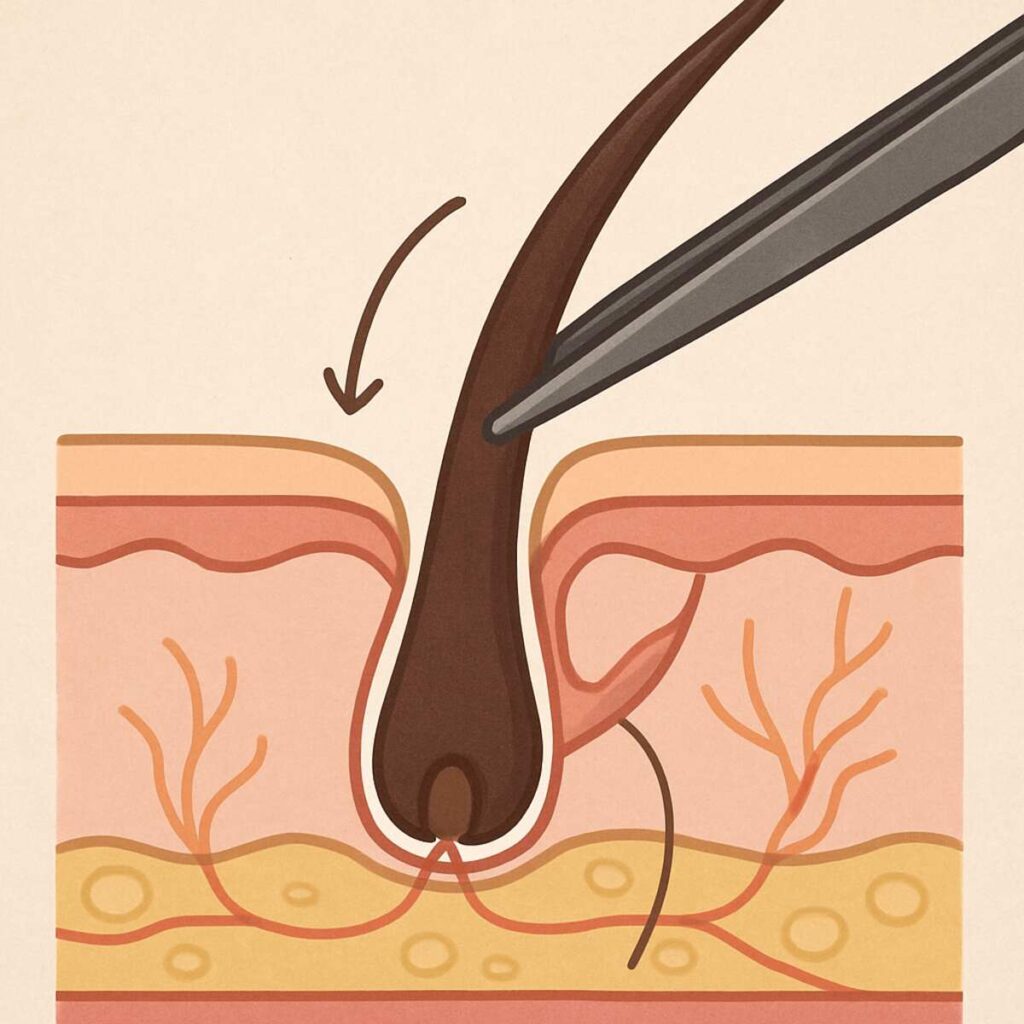
When you shave, the root of the hair remains safely nestled inside the follicle under the skin’s surface. When you wax, the entire hair shaft—including the bulb at the root—is physically pulled out of the follicle.
Why is this beneficial?
- Slower Regrowth: Because the follicle is completely emptied, your body has to regenerate a brand-new hair bulb before a hair can even begin to push its way back up to the surface of the skin. This process takes weeks, granting you a long period of flawlessly smooth skin.
- Softer Hair: When a new hair grows in after waxing, it grows with a naturally finely tapered point. A shaved hair, by contrast, has a blunt, jagged edge. This means that when waxed hair finally does grow back, it feels soft and downy rather than rough and stubbly.
- Gentle Exfoliation: Waxing acts as a fantastic mechanical exfoliant. When the wax is removed, it takes dead, dry skin cells from the stratum corneum (the outermost layer of the epidermis) with it, leaving the skin glowing and soft.
Does It Get Easier? The Truth About Pain
Let’s address the elephant in the room: pulling hair out of a highly sensitive area is not going to be a completely sensation-free experience. However, the anticipation is almost always worse than the actual event.
A question estheticians hear daily is: does waxing get less painful over time? The resounding answer from both professionals and dermatologists is yes.
Here is the physiological reason why: The first time you wax, your hair follicles are holding onto those hair roots with incredible strength. The roots are thick, healthy, and deeply embedded. The physical act of pulling them out causes a sudden shock to the nerve endings surrounding the follicle.
However, if you wax consistently (without shaving in between), several things happen:
- Follicular Weakening: Repeatedly ripping the hair from the root traumatizes the follicle. Over time, the follicle becomes weaker and loses its grip on the hair.
- Thinner Hair: The traumatized follicle begins to produce finer, thinner hair. Finer hair slips out of the pore with significantly less resistance.
- Nerve Adaptation: Your nervous system slowly adapts to the sensation. What felt shocking the first time feels like a mere sting the fifth time.
By your third or fourth consecutive appointment, the pain level decreases dramatically. Many regular clients describe the sensation as a quick, warm “band-aid pull” rather than acute pain.
The Anatomy of Hair Growth: Timing Your Appointments
Understanding how your hair grows is the secret to achieving the longest-lasting results. Hair does not grow in unison; it grows in three distinct phases. Understanding these hair growth cycles and waxing schedule optimization will change your grooming game.
- Anagen Phase (Active Growth): This is the ideal phase for waxing. The hair is attached to the dermal papilla (blood supply). When you wax hair in the anagen phase, you destroy the blood supply temporarily, which heavily delays regrowth.
- Catagen Phase (Transition): The hair detaches from the blood supply and stops growing.
- Telogen Phase (Resting): The hair sits dormantly in the follicle until a new anagen hair pushes it out.
At any given moment, the hairs in your pubic region are in different phases. If you get a wax and notice a few stray hairs popping up a week later, your waxer didn’t break the hairs—those were simply telogen hairs resting just below the surface of the skin that hadn’t sprouted yet!
To sync up your hair cycles so that the majority of your hair is in the anagen phase at the same time, you need to stick to a strict schedule. Professionals recommend booking your appointments every 4 to 6 weeks. Do not shave between appointments, as this resets the growth cycle and ruins the syncing process.
Choosing Your Weapon: Wax Varieties
Not all hair removal mediums are created equal. When booking an appointment, you will likely encounter a debate: sugaring vs hard wax for pubic area grooming. Both are excellent, but they operate differently.
Hard Wax
Hard wax is the industry standard for Brazilian waxing. It is applied to the skin in a warm, thick layer, following the direction of hair growth. As it cools, it hardens and “shrink-wraps” around the hair shafts without adhering to the live skin cells beneath. The esthetician then creates a small lip with the wax and pulls the wax itself off in the opposite direction of hair growth.
- Pros: Highly effective for coarse hair, less painful than soft (strip) wax, very quick process.
- Cons: Must be applied at a warm temperature; if not formulated well, it can be brittle.
Sugaring (Sugar Paste)
Sugaring uses a paste made entirely of natural ingredients: lemon juice, water, and sugar. The paste is applied at body temperature against the direction of hair growth, molding around the follicle. It is then flicked off in the direction of hair growth.
- Pros: 100% natural, water-soluble (easy cleanup), pulling in the direction of growth can sometimes reduce breakage.
- Cons: Can be more time-consuming, requires a highly skilled technician, can feel “tuggier” during application.
The Importance of Ingredients
If you opt for hard wax and have sensitive skin, you should inquire about the salon’s products. Look for salons that use hypoallergenic hard wax ingredients.
Traditional waxes often contain rosin (colophonium), a sticky substance derived from pine trees that is a known allergen for many people, causing contact dermatitis. Modern, high-end hypoallergenic waxes substitute natural rosin with synthetic polymers (like hydrogenated polycyclopentadiene). They also frequently include soothing additives such as titanium dioxide (which creates a creamy texture and acts as a buffer on the skin), chamomile, aloe vera, and calendula.
Pre-Waxing Masterclass: Setting Yourself Up for Success
The results of your treatment are heavily dependent on what you do before you step into the salon. Knowing how to prepare for intimate hair removal is half the battle.
1. Let It Grow
Your hair must be at least 1/4 inch long (about the size of a grain of rice) for the wax to effectively grip it. If you have been shaving, this generally means letting your hair grow out for 2 to 3 weeks. If the hair is too short, the wax won’t catch it. If it is too long (over an inch), the esthetician may trim it to prevent excess tugging, but it is better to leave it too long than too short.
2. Hydrate Inside and Out
Healthy, hydrated skin releases hair much more easily than dry, tight skin. Drink plenty of water in the days leading up to your appointment. Keep the bikini area moisturized daily, but skip the moisturizer on the actual day of your appointment, as the wax needs a clean, oil-free surface to adhere to.
3. The Exfoliation Protocol
Establishing a solid exfoliation routine before hair removal appointment days is vital. Exfoliating removes the dead skin cells that block hair follicles, allowing the hairs to stand up straight and ensuring the wax grabs the hair, not the skin.
- When: Exfoliate 24 to 48 hours before your appointment. Do not exfoliate on the day of the wax, as this can make the skin too sensitive.
- How: Use a gentle physical scrub (like a fine sugar scrub) or an exfoliating mitt. Gently massage the pubic mound and bikini line in circular motions. Avoid getting any products inside the inner labia.
4. Skip the Stimulants
Avoid caffeine and alcohol for at least 4-6 hours before your appointment. Both are stimulants that restrict blood vessels and tighten pores, which can make the hair harder to pull out and heighten your nerve sensitivity.
Pain Management Strategies
If you have a low pain tolerance, you can take steps to dull the sensation. Taking an over-the-counter anti-inflammatory (like Ibuprofen) 30 to 45 minutes before your appointment can reduce inflammation and take the edge off the pain.
For extreme anxiety or sensitivity, you might consider topical anesthetics. When looking for the best numbing cream for body hair removal, seek out products containing 4% to 5% Lidocaine.
- How to use it: Numbing cream must be applied thickly to the bikini area 30 to 45 minutes before your appointment. You must then cover the area with plastic wrap (cling film) so the cream doesn’t dry out, allowing it to penetrate the skin.
- Crucial Step: You must inform your esthetician that you used numbing cream so they can thoroughly cleanse the skin and remove all residue before applying wax, otherwise, the wax will just slide right off.
Wardrobe Choices for Wax Day
Believe it or not, your clothing choices matter. Knowing exactly what to wear to a salon appointment can save you from severe post-wax discomfort.
After a Brazilian, your skin will be highly sensitive, and your hair follicles will be completely open and vulnerable to bacteria and friction.
- Wear: Loose-fitting, breathable fabrics. A loose maxi dress, flowing linen pants, or baggy sweatpants are ideal.
- Underwear: Choose 100% breathable cotton underwear. Better yet, if you are wearing a dress or loose pants, you can go commando on the way home to eliminate friction entirely.
- Avoid: Tight jeans, leggings, synthetic lace underwear, or restrictive shapewear.
Selecting the Right Professional
Intimate hair removal requires an immense amount of trust. Do not go to just any walk-in salon; do your research. Ensuring your provider has proper professional esthetician qualifications is non-negotiable for your health and safety.
Look for a state-licensed Esthetician or Cosmetologist. A specialized “Waxing Specialist” who spends all day doing Brazilians will generally be much faster and more skilled than a generalist who only does one wax a month.
Red Flags to Watch Out For:
- Double Dipping: The esthetician should NEVER dip a used wooden spatula back into the communal wax pot. They must use a brand-new stick for every single swipe. Double-dipping introduces bacteria, bodily fluids, and potential pathogens into the wax pot.
- Lack of Gloves: Your esthetician must wear medical-grade gloves during the entire procedure.
- Unsanitary Room: The waxing table should be lined with fresh, medical-grade paper or clean towels that are changed between every client.
Inside the Treatment Room: What to Expect
If it is your first time, the anxiety of not knowing what happens behind the closed door is often the worst part. Here is the step by step bikini area grooming process you can expect at a professional studio.
- The Consultation: The esthetician will ask about any medications you are taking (Retin-A, Accutane, and antibiotics can thin the skin and contraindicate waxing) and what style of wax you want.
- Undressing: The esthetician will leave the room or turn around, asking you to undress from the waist down. You will typically be provided with a cleansing wipe to freshen up the area. You will then lie on your back on the waxing table and drape a towel over your lap.
- Positioning: You will be asked to get into a “butterfly” position—lying on your back, knees bent, and feet touching, letting your knees drop to the sides. This exposes the inner thighs and pubic mound.
- Cleansing and Prepping: The esthetician will cleanse the area with an antimicrobial tonic to remove sweat, oils, and bacteria. They will then apply a pre-wax oil or a light dusting of powder. This crucial step creates a protective barrier, ensuring the hard wax adheres only to the hair, not the delicate skin.
- The Application and Pull: The esthetician applies the warm wax in sections using a wooden spatula. Once it cools (which takes just seconds), they will ask you to take a deep breath in, and exhale as they pull the wax off in a swift, fluid motion parallel to the skin.
- Pressure Application: Immediately after the pull, a skilled esthetician will press their gloved hand firmly against the freshly waxed skin. This pressure instantly soothes the nerve endings and significantly reduces the sting.
- The Backside: To access the hair between the buttocks, you will be asked to either pull your knees to your chest while lying on your back, or roll over onto your stomach and spread your legs slightly. While it sounds awkward, estheticians do this multiple times a day—it is completely clinical to them, and it is usually the least painful part of the entire wax!
- Tweezing and Finishing: Once the wax is done, the esthetician will use sanitized tweezers to pluck any stubborn stray hairs. Finally, they will apply a soothing post-wax serum or oil.
The entire physical process usually takes between 15 and 30 minutes.
The Golden Rules of Recovery: Immediate Aftercare
Congratulations, you survived the wax! Now, the real work begins. Your pores are open, and the skin is traumatized. Proper aftercare waxing brazilian protocols during the first 24 to 48 hours are critical to prevent infections, breakouts, and severe irritation.
For the first 48 hours, adhere strictly to the “No Heat, No Friction, No Bacteria” rule:
- No Sex: Friction and exchange of bodily fluids on freshly waxed skin can lead to painful friction burns and bacterial infections.
- No Workouts: Intense sweating in tight gym clothes is a breeding ground for bacteria to enter your open follicles. Skip the spin class.
- No Hot Baths, Saunas, or Steam Rooms: Heat aggravates inflammation. Stick to cool or lukewarm showers.
- No Pools or Oceans: Chlorine, salt water, and the natural bacteria found in bodies of water can cause severe irritation and infection.
Calming the Storm
It is perfectly normal for the skin to look slightly inflamed, pink, and dotted with tiny red spots (called histamine reactions) where the hair roots were pulled out.
If you need help soothing redness after bikini area treatment, apply a cold compress (an ice pack wrapped in a clean, soft t-shirt) to the area for 10 minutes. You can also apply pure, alcohol-free aloe vera gel, or a witch hazel toner to calm the inflammation. If the itching and redness are intense, an over-the-counter 1% hydrocortisone cream applied sparingly can work wonders.
Long-Term Maintenance: Keeping Skin Flawless
Once the 48-hour danger zone has passed, you transition into long-term maintenance. The pubic area has unique needs compared to the rest of the body, requiring specialized aftercare for sensitive skin areas.
Your daily routine should consist of gentle cleansing and deep moisturizing. Use a mild, fragrance-free body wash. The skin in the intimate area does not like highly perfumed soaps, which can disrupt the natural pH and irritate the freshly exfoliated skin. Moisturize daily with a lightweight, non-comedogenic lotion or a specialized pubic hair oil (look for ingredients like jojoba oil, tea tree oil, and grapeseed oil) to keep the skin supple. Soft, hydrated skin allows new hairs to easily break through the surface without becoming trapped.
The Ultimate Guide to Banish Bumps: Ingrown Hairs
Perhaps the biggest enemy of the Brazilian waxer is the dreaded ingrown hair. An ingrown hair occurs when a hair begins to grow back but fails to break through the surface of the skin. Instead, it curls back downward, growing under the skin. This triggers an inflammatory response, resulting in a painful, red, pimple-like bump.
Knowing how to prevent ingrown hairs after waxing will elevate your waxing experience from good to perfect.
The secret lies in combining physical and chemical exfoliation, starting on day 3 post-wax (never before!).
Chemical Exfoliation (The MVP)
Physical scrubs are great, but chemical exfoliants are the true heroes for the bikini area. Look for serums or pads containing Alpha Hydroxy Acids (AHAs) or Beta Hydroxy Acids (BHAs).
- Salicylic Acid (BHA): This is oil-soluble, meaning it can penetrate deep into the hair follicle to dissolve the mixture of dead skin cells and sebum that clogs the pore.
- Glycolic Acid (AHA): This water-soluble acid works on the surface level of the skin, gently ungluing the bonds between dead skin cells, ensuring the surface remains clear so the hair can push through.
Apply an ingrown hair serum containing these acids to the bikini area 3 to 4 times a week after showering.
Physical Exfoliation
Incorporate a gentle physical scrub or an exfoliating glove into your shower routine 2 to 3 times a week. Use light pressure; scrubbing too hard can cause micro-tears in the skin and actually cause inflammation and hyperpigmentation.
Rule of Thumb: Never pick or squeeze an ingrown hair! Your hands carry bacteria, and squeezing can push the infection deeper into the skin, leading to severe scarring, hyperpigmentation, and cysts. If an ingrown hair is painful or deep, apply a warm compress to draw it to the surface, and let your esthetician safely extract it at your next appointment.
The Psychological and Lifestyle Benefits
While the physical benefits of Brazilian waxing are numerous, the lifestyle and psychological impacts are often what turn first-timers into lifelong clients.
- Hygiene and Cleanliness: While having pubic hair is completely natural and hygienic, many people feel cleaner without it. Removing the hair reduces the surface area for sweat and odor-causing bacteria to cling to. Many clients report feeling significantly fresher during menstruation when they are fully waxed.
- Athletic Comfort: For athletes, particularly swimmers, runners, and cyclists, pubic hair can cause painful friction, chafing, and pulling against tight athletic gear. A Brazilian wax eliminates this completely.
- Spontaneity and Confidence: There is a distinct psychological boost associated with being perfectly groomed. Whether it translates to feeling more confident in intimacy, feeling fabulous in a swimsuit on a beach holiday, or simply the peace of mind knowing you don’t have to frantically shave in the shower before an event, the convenience factor is unparalleled.
Broadening the Horizon: The “Manzilian”
It is a common misconception that Brazilian waxing is exclusively for women. The demand for male intimate waxing—often playfully referred to as the “Manzilian” or “Brozilian”—has skyrocketed in recent years.
Men opt for intimate waxing for many of the same reasons women do: improved hygiene, reduced chafing for sports (especially bodybuilding and cycling), and personal aesthetic preference. The procedure is very similar, though it requires specific techniques to navigate male anatomy safely.
If you are a male looking to book this service, ensure you explicitly seek out a salon that advertises the Manzilian, as not all estheticians are trained or comfortable performing male intimate waxing. The same preparation and aftercare rules apply: exfoliate, avoid caffeine, and wear loose cotton clothing.
Frequently Asked Questions (Expert Q&A)
To round out this comprehensive guide, let’s address some of the most common, yet rarely asked, questions about the intimate waxing experience.
1. Can I get a Brazilian wax while on my period?
Yes, you absolutely can. However, you must wear a clean tampon or a menstrual cup during the service. Be aware that during your menstrual cycle—and the few days leading up to it—your body produces more prostaglandins, which makes your pain receptors highly sensitive. The wax will likely hurt more than usual. If you have a low pain tolerance, try to schedule your appointment for the week after your period ends.
2. I'm pregnant; is it safe to get waxed?
Yes, waxing is entirely safe during pregnancy and is very popular for women in their third trimester who can no longer see or reach past their bellies to shave! Just keep in mind that increased blood flow and hormonal changes during pregnancy can make the skin more sensitive, so it may feel slightly more uncomfortable. Always clear it with your OBGYN first if you have a high-risk pregnancy.
3. Will my skin be loose or saggy from years of waxing?
This is a major myth. When performed correctly, the esthetician holds the skin completely taut during the pull. The trauma is localized strictly to the hair follicle, not the structural integrity of the skin. Waxing will not cause premature sagging or wrinkles in the intimate area.
4. What if I get an erection during a male Brazilian?
For men, this is a very common anxiety. Remember that the intimate area is packed with nerve endings, and the manipulation of the skin can sometimes trigger an involuntary physiological response. Professional estheticians are trained to handle this; they understand it is a non-sexual, biological reaction. They will simply ignore it and continue working swiftly and professionally.
5. How long does the hair stay completely gone?
Because of the varied hair growth cycles, you won’t be completely hairless for the entire 4 to 6 weeks between appointments. Generally, you can expect 1 to 2 weeks of completely bare, perfectly smooth skin. In weeks 3 and 4, you will see a soft, sparse regrowth beginning to emerge. This regrowth is exactly what the esthetician needs to grip the wax at your next appointment.
Conclusion
Embarking on your first Brazilian waxing journey can feel intimidating, but armed with the right knowledge, it is a highly rewarding form of self-care. The initial sharp sting of the first appointment is a small price to pay for weeks of effortlessly smooth skin, the elimination of daily shaving irritation, and the profound boost in personal confidence.
By prioritizing your skin’s health—respecting the growth cycles, meticulously preparing your skin with proper exfoliation, investing in the right aftercare, and trusting a qualified professional—you ensure a safe and successful experience. The world of intimate grooming has evolved significantly from the ancient sugar pastes of Egypt, and today’s advanced hypoallergenic waxes and expert techniques make the process faster and more comfortable than ever before.
Throw away the dull razors, cancel the expensive laser consultations, and embrace the transformational benefits of pulling it from the root. Your smoothest skin is just one appointment away.
