


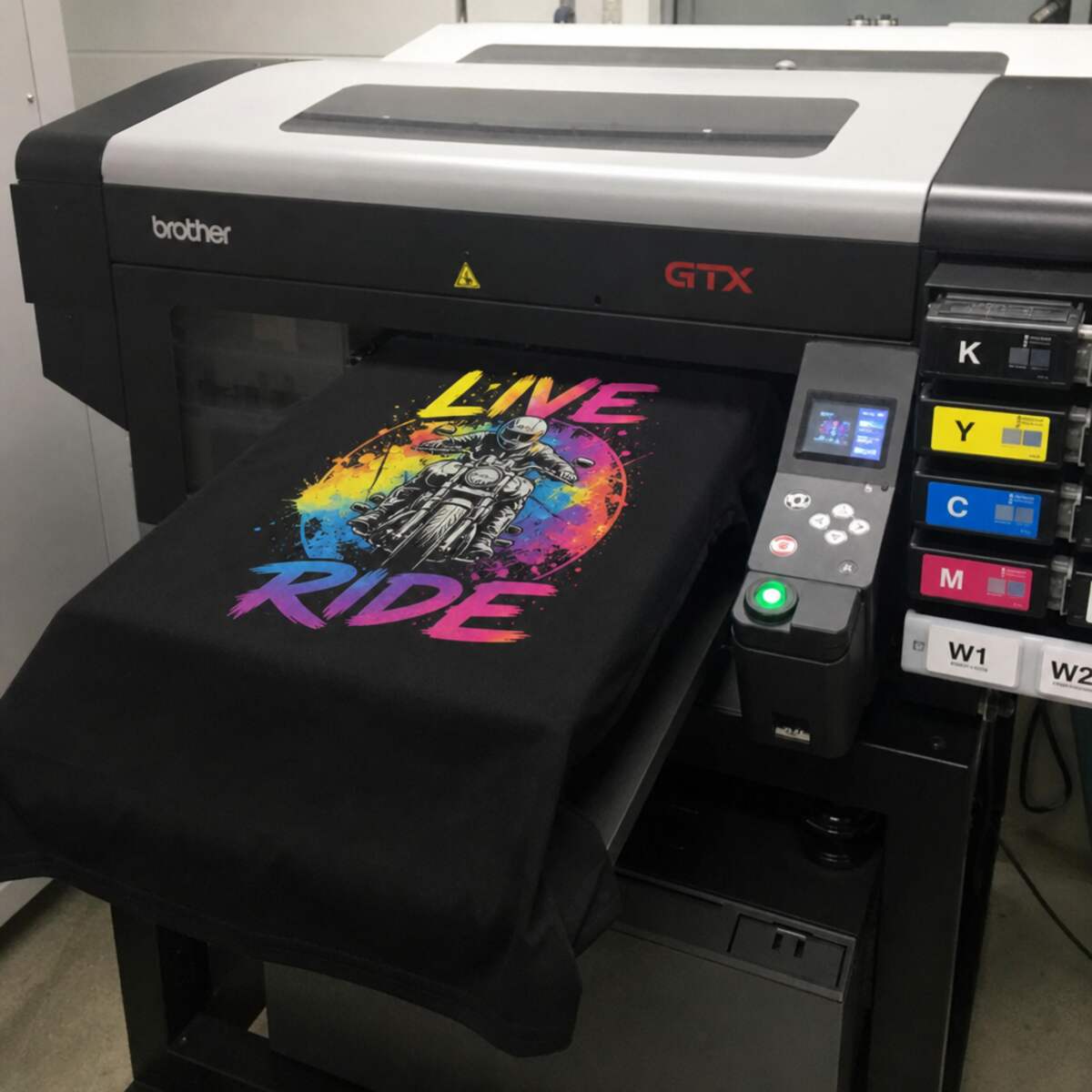
The world of apparel decoration has undergone a massive transformation over the past decade. If you are exploring the custom clothing industry, looking to upgrade your current print shop, or simply curious about how those incredibly detailed, photorealistic designs end up on your favorite t-shirts, you have likely encountered the term Direct to Garment Printer. Find out the best info about dtg printer.
Also known broadly as DTG, this technology has revolutionized the way we approach custom apparel. It bridges the gap between artistic vision and final product, allowing creators, entrepreneurs, and established brands to bypass the limitations of traditional printing methods.
In this comprehensive guide, we are going to explore the vast advantages of dtg printing. We will dive deep into the technology, compare it against other industry standards, explore the necessary materials and software, outline the economics of the business, and provide actionable tips for maintaining these complex machines. Whether you are a seasoned print veteran or an aspiring apparel brand owner, this guide will provide you with the insights you need to succeed.
What is a Direct to Garment Printer?
At its core, a Direct to Garment Printer operates very similarly to the inkjet printer you might have sitting on your office desk. However, instead of feeding paper through the machine to print a document, a DTG printer uses a specialized platen to hold a piece of clothing—usually a t-shirt, hoodie, or tote bag—perfectly flat. The print head then makes passes over the fabric, depositing microscopic droplets of ink directly into the fibers of the garment.
This process removes the need for physical screens, stencils, or massive setup times. Because the design is sent straight from a computer to the printer, dtg printing is the ultimate solution for small batch orders, extreme detail, and rapid turnaround times.
The Rise of Print on Demand
One of the most significant shifts enabled by the Direct to Garment Printer is the explosion of the print on demand business model. In the past, creating custom apparel required ordering hundreds of identical shirts to make the setup costs worthwhile. If a design didn’t sell, you were left with boxes of dead inventory.
With DTG, you can print a single shirt just as easily as you can print fifty. This has empowered creators to list hundreds of designs online, only producing the physical product after a customer has made a purchase. The print on demand model eliminates inventory risk, lowers the barrier to entry for new brands, and minimizes textile waste.
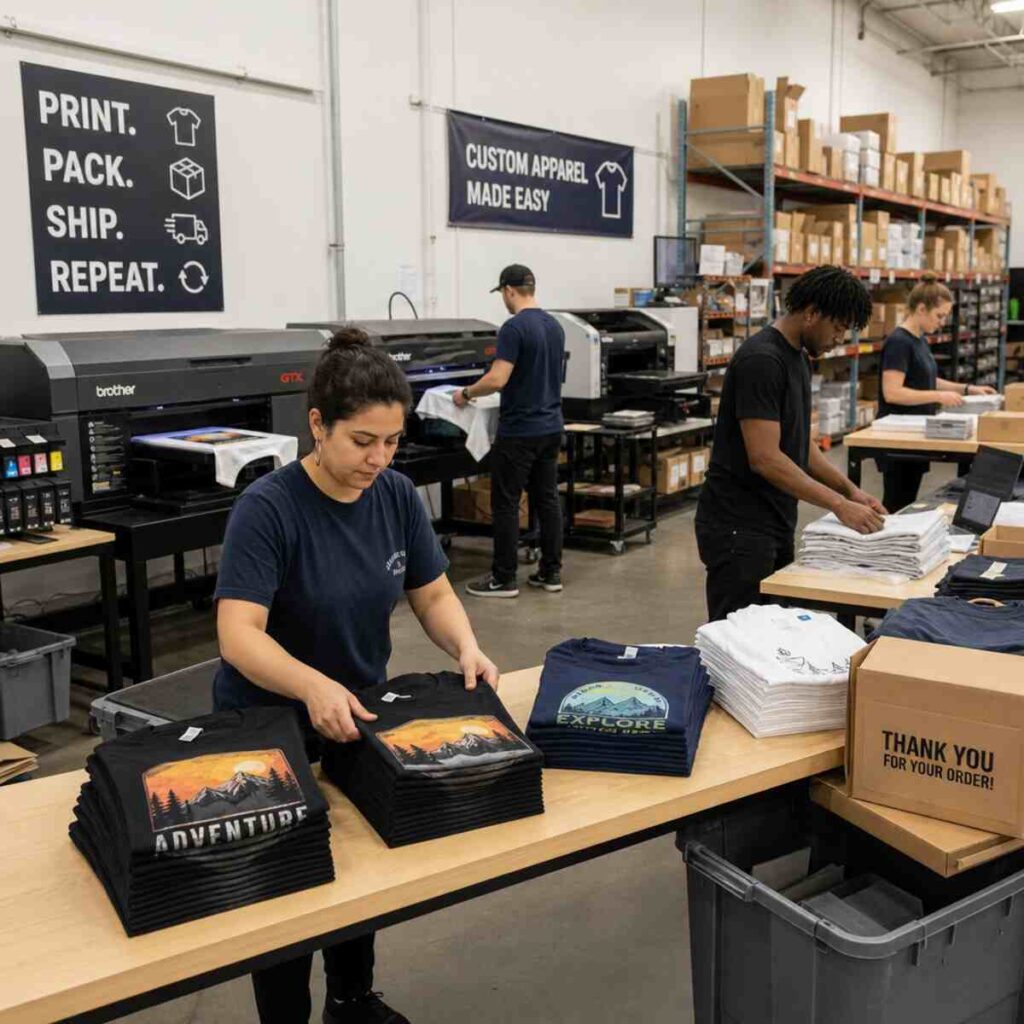
Top Advantages of Direct to Garment Printing
Investing in a Direct to Garment Printer offers a multitude of benefits that traditional methods simply cannot match. Let’s break down the most impactful advantages.
1. Unmatched Detail with High Resolution Photographic Fabric Designs
If you want to print a photograph, a detailed illustration with thousands of colors, or a design featuring complex gradients and drop shadows, traditional printing methods will struggle. They require reducing the image to a handful of solid colors.
DTG printers, however, excel at rendering high resolution photographic fabric designs. Because they use the CMYK (Cyan, Magenta, Yellow, Black) color model—often supplemented with Red, Green, and White inks for extended gamuts—they can mix millions of exact color shades on the fly. The result is a vibrant, photorealistic print that captures every nuance of the original digital artwork.
2. Zero Minimum Order Quantities (MOQs)
Because there is virtually no physical setup involved—no screens to burn, no ink to manually mix, no presses to align—you can profitably print a single item. This flexibility is a game-changer for businesses offering personalized items, like shirts with family names, custom pet portraits, or event-specific merchandise.
3. Sustainability and Eco-Friendliness
The modern consumer is incredibly conscious of the environmental impact of their purchases. Fortunately, DTG technology aligns beautifully with sustainable practices. By utilizing water-based eco-friendly ink sets, DTG printers significantly reduce the output of volatile organic compounds (VOCs) and toxic chemicals commonly associated with older plastisol inks.
Furthermore, the print on demand nature of DTG means garments are only created when there is a guaranteed buyer, drastically reducing the millions of tons of unsold clothing that end up in landfills every year.
4. Rapid Turnaround Times
In a world conditioned by next-day shipping, speed is a competitive advantage. With a Direct to Garment Printer, you can receive an order at 9:00 AM, print it by 9:15 AM, and have it in a shipping polymailer by 9:30 AM. This agility allows businesses to capitalize on viral internet trends immediately, getting relevant merchandise to market weeks faster than competitors relying on overseas manufacturing.
Comparing Technologies: Screen Printing Versus Digital Apparel Decoration
To truly appreciate the advantages of a Direct to Garment Printer, it is helpful to look at the classic debate: screen printing versus digital apparel decoration. Neither method is inherently “better” than the other; rather, they serve completely different operational models and business needs.
Setup Time and Complexity
- Screen Printing: Requires separating the digital artwork by color, outputting films, coating screens with emulsion, exposing the screens to UV light, washing them out, taping them, aligning them on a press, and manually mixing inks. This process can take hours before a single shirt is printed.
- DTG Printing: Involves loading the digital file into software, applying a pretreatment fluid to the shirt (if necessary), loading the shirt onto the printer, and hitting “print.” Setup takes minutes.
Cost Efficiency for Runs
- Screen Printing: Ideal for massive bulk runs. Once the heavy setup is complete, printing 500 identical shirts is incredibly fast and cheap per unit.
- DTG Printing: Ideal for short runs (1 to 50 shirts) and extreme customization. The cost per print remains flat whether you print one shirt or one hundred, making it less economical for massive bulk orders but highly profitable for individual retail sales.
Color Capabilities
- Screen Printing: Priced per color. A five-color design costs significantly more to produce than a one-color design due to the extra screens and labor. Gradients are difficult and require advanced halftoning techniques.
- DTG Printing: Color independent. Printing a one-color black logo costs roughly the same as printing a full-color photograph.
Alternative Digital Methods: Digital to Garment vs Film Transfer Methods
While comparing DTG to screen printing is common, a newer technology has recently disrupted the market: Direct to Film (DTF). Understanding digital to garment vs film transfer methods is crucial for modern print shops.
The DTF Process
In Direct to Film printing, the design is printed onto a special PET film using similar water-based pigment inks. A powdered adhesive is then applied to the wet ink, melted, and the entire film is heat-pressed onto the garment. The film is then peeled away, leaving the design on the shirt.
Key Differences
- Fabric Versatility: DTF can be applied to almost any fabric—cotton, polyester, nylon, and blends—without the need for pretreatment. DTG is primarily optimized for high-cotton garments.
- Feel (The “Hand”): DTG ink penetrates the fibers of the shirt, resulting in an incredibly soft feel, especially on light-colored garments. DTF creates a thin, flexible plastic-like layer sitting on top of the fabric. While modern DTF feels great, it is noticeably heavier than a good DTG print.
- Process Flow: DTG requires pretreatment for dark garments, which can be messy and requires a learning curve to get right. DTF bypasses pretreatment but adds the step of managing and curing adhesive powder.
Both have their distinct advantages, but for the absolute softest feel, highest retail quality, and seamless breathability on 100% cotton garments, the Direct to Garment Printer remains the gold standard.
Navigating Inks and Fabrics
The magic of DTG printing lies in the synergy between the hardware, the ink, and the fabric. If any of these three elements are mismatched, the final print will suffer.
Utilizing Specialized Aqueous Pigment Textile Inks
Unlike standard paper printers that use dye-based inks, a Direct to Garment Printer utilizes specialized aqueous pigment textile inks. “Aqueous” means they are water-based, and “pigment” means the color comes from microscopic solid particles suspended in the liquid base.
These inks are formulated to bind securely with natural fabric fibers. They are safe, non-toxic, and offer excellent stretchability so the design doesn’t crack when the wearer moves.
Which Fabrics are Compatible with Digital Inks?
A frequent question for newcomers is: which fabrics are compatible with digital inks? Because aqueous pigment inks rely on a chemical bond with the fabric, they perform best on natural, porous fibers.
- 100% Ring-Spun Cotton: This is the holy grail for DTG printing. Ring-spun cotton has a smooth, tightly woven surface that acts as a perfect canvas, preventing the ink from falling through the weave and ensuring crisp, vibrant colors.
- Cotton/Poly Blends (e.g., 80/20 or 50/50): These are generally compatible but require careful attention. The higher the polyester content, the harder it is for the water-based ink to bond. You may experience slight dye migration (where the shirt’s dye bleeds into the ink) or a less vibrant print.
- 100% Polyester: Traditionally, pure polyester is the enemy of standard DTG printing. Water-based inks bead up on synthetic plastics instead of absorbing. While some specialized DTG machines and chemical treatments are emerging for polyester, it remains a challenging fabric. Sublimation or DTF are usually better suited for pure polyester.
Best Materials for Sustainable Custom Clothing
If your brand focuses on eco-consciousness, pairing your water-based inks with the right garments is essential. The best materials for sustainable custom clothing for DTG printing include:
- Organic Cotton: Grown without synthetic pesticides or fertilizers, providing a beautiful print surface while protecting the environment.
- Bamboo Blends: Bamboo grows incredibly fast and requires minimal water. When blended with organic cotton, it creates an exceptionally soft garment that prints beautifully.
- Recycled Cotton: Made from post-industrial or post-consumer cotton waste.
The Nuances of Printing on Dark vs Light Fabrics
There is a massive difference between printing on dark vs light fabrics in the DTG world.
When printing on a white or light-colored shirt, the CMYK inks are jetted directly into the fabric. The process is incredibly fast, uses very little ink, and results in a print that you can barely feel with your hand.
However, if you print translucent CMYK inks directly onto a black shirt, the design will simply disappear into the dark fabric. Therefore, printing on dark garments requires a “white underbase.” The printer first lays down a layer of opaque white titanium dioxide ink in the exact shape of the design. Once that white layer is set, the CMYK colors are printed on top of it. This process uses significantly more ink, takes twice as long, and necessitates the most critical step in DTG printing: pretreatment.
The Crucial Role of Preparation: Pretreating Garments for Digital Printing
If there is a secret art to mastering a Direct to Garment Printer, it is pretreating garments for digital printing. Pretreatment is a liquid chemical solution applied to the garment before it goes into the printer.
Why Pretreatment is Non-Negotiable
When printing that crucial white underbase on a dark shirt, you need the white ink to sit precisely on top of the fabric fibers. If you spray liquid ink onto an untreated cotton shirt, the fabric acts like a sponge, soaking the white ink deep into the weave. The result is a dull, faded, and spotty print.
Pretreatment acts as a chemical primer. When the white ink hits the pretreated fabric, a chemical reaction occurs instantly, causing the ink to gel and freeze on the surface. This creates a smooth, opaque white canvas for the color inks to rest upon, ensuring eye-popping vibrancy and excellent wash durability.
Application Techniques and Tools
You can apply pretreatment in a few ways:
- Hand Spraying: Using a simple HVLP (High Volume Low Pressure) paint sprayer. This is the cheapest method but requires immense skill to achieve an even coat. An uneven coat leads to a blotchy print.
- Automatic Pretreatment Machines: A dedicated machine where you load the shirt, close the drawer, and precise nozzles spray a perfect, consistent amount of fluid every time. For a professional shop, this investment is non-negotiable.
Curing Ink with a Commercial Heat Press
Once a shirt is printed, the water in the ink must be evaporated, and the pigments must be permanently locked into the fabric. Curing ink with a commercial heat press is the standard procedure.
The heat press applies high, even temperature (usually around 320°F to 330°F / 160°C to 165°C) and heavy pressure to the garment. Hovering the heat press over the wet ink for a few seconds first helps release the steam, and then locking the press down for 60 to 90 seconds (protected by a sheet of parchment paper or Teflon) cures the ink permanently. Alternatively, high-volume shops use massive forced-air conveyor dryers to cure hundreds of shirts an hour.
Software and Workflow: The Brains Behind the Machine
You cannot simply plug a Direct to Garment Printer into your laptop, hit CTRL+P on a JPEG, and expect a good result. You need a translator between your design file and the printer’s hardware.
Raster Image Processing Software for Apparel
This translator is known as a RIP. Utilizing high-quality raster image processing software for apparel is what separates amateur results from professional retail-ready garments.
A RIP software takes your design and performs several highly complex tasks in milliseconds:
- White Underbase Generation: It analyzes the image and automatically dictates exactly where the white ink should go, how thick it should be, and creates a “choke” (pulling the white base in slightly so it doesn’t peek out around the edges of the color).
- Color Profiling (ICC Profiles): Monitors and computer screens use RGB light to display colors, while printers use CMYK ink. The RIP software translates these color languages, ensuring that the bright red apple on your screen prints as a bright red apple on the shirt.
- Ink Cost Calculation: Advanced RIPs will tell you exactly how many milliliters of ink a specific design will use, allowing you to calculate your exact profit margins before you even print the shirt.
- Knockouts: If you are printing a design with black elements onto a black t-shirt, the RIP software can “knock out” the black parts of the design, allowing the black of the shirt to show through instead. This saves ink, makes the print softer, and looks much more natural.
Maintenance and Troubleshooting: Protecting Your Investment
A Direct to Garment Printer is an industrial piece of equipment. Because it uses water-based inks that dry rapidly when exposed to air, the machine requires strict, regular maintenance. Neglect is the number one cause of printer failure in this industry.
Routine Cleaning for Industrial Fabric Machines
To keep your printer running flawlessly, you must implement a strict schedule of routine cleaning for industrial fabric machines.
- Daily Maintenance: This usually involves agitating the white ink (which settles easily because of the heavy titanium dioxide particles), performing nozzle checks, and cleaning the wiper blade and capping station (the area where the print head rests).
- Weekly Maintenance: Cleaning around the print head assembly with specialized cleaning fluid and lint-free swabs, and checking spittoons and waste ink tanks.
- Monthly Maintenance: Flushing lines if the printer isn’t used constantly, greasing the rails, and updating firmware.
Fixing Common Inkjet Print Head Issues
The print head is the most expensive and delicate part of your machine. It features thousands of microscopic nozzles. When these nozzles clog with dried ink, you will see banding (horizontal lines missing in your print) or completely incorrect colors.
Fixing common inkjet print head issues usually involves:
- Running Automated Head Cleanings: Most printers have a built-in cleaning utility that pushes ink through the head forcefully to clear light clogs.
- Targeted Cleaning: If the white channels are clogged (the most common issue), you may need to run a “powerful” clean specifically on the white channels.
- Wet Capping: If clogs persist, soaking the capping station in cleaning solution and parking the print head over it overnight can dissolve stubborn, dried ink.
- Flushing: In extreme cases, you may need to empty the ink lines and run specialized cleaning fluid through the system to break down severe blockages.
Pro Tip: The absolute best way to prevent print head issues is environmental control. Water-based inks demand humidity. You must keep the room where your DTG printer lives at a consistent 45% to 60% humidity and a stable temperature around 70°F (21°C). If your room is too dry, the ink will dry inside the print head, costing you thousands of dollars.
The Economics of DTG: Building a Profitable Business
Understanding the technology is only half the battle; understanding the numbers is what keeps the lights on. Let’s break down the financial realities of running a DTG operation.
The Cost of Starting a Professional Printing Business
The cost of starting a professional printing business using DTG can vary wildly based on the tier of equipment you choose.
- Entry-Level / Prosumer: For a converted desktop printer or a small, entry-level commercial DTG, expect to spend between $3,000 and $10,000. These machines are slower and may require more manual maintenance, but they are great for proving a concept.
- Mid-Range Commercial: Machines from leading brands that offer reliable white ink systems, better speed, and robust support typically run between $12,000 and $25,000.
- Industrial Volume: Massive machines with multiple print heads designed to print hundreds of shirts a day will cost anywhere from $50,000 to $250,000+.
Beyond the printer, you must budget for a commercial heat press ($1,000 – $2,500), an automatic pretreatment machine ($3,000 – $5,000), RIP software (often included, but upgrades can cost $500 – $1,500), blank garments, inks, pretreatment fluids, and environmental control systems (humidifiers). Realistically, a solid, mid-range, professional setup requires a capital investment of $20,000 to $35,000.
Estimating Production Costs Per Shirt
To set your retail prices correctly, you must excel at estimating production costs per shirt. Let’s look at a hypothetical breakdown for printing a standard 10×12 inch full-color design on a dark shirt:
- The Blank Garment: A high-quality, ring-spun cotton black t-shirt wholesale: ~$3.50.
- Pretreatment Fluid: For a standard dark shirt print area: ~$0.35.
- White Ink (Underbase): White ink is heavier and more expensive. For a solid 10×12 underbase: ~$1.20.
- CMYK Color Inks: Used much more sparingly than white: ~$0.45.
- Labor & Overhead: (Electricity, tape, parchment paper, equipment depreciation, operator time): ~$1.50.
Total Estimated Production Cost: ~$7.00 per shirt.
If you are running a direct-to-consumer print on demand brand, you might sell this custom, highly detailed premium shirt for $25.00 to $30.00, yielding an excellent gross profit margin of $18.00 to $23.00 per shirt. If you are doing short-run wholesale (e.g., printing 30 shirts for a local coffee shop), you might sell them for $15.00 each, still making a solid profit while saving the coffee shop from the massive setup fees of screen printing.
Actionable Tips for Succeeding with Your Direct to Garment Printer
If you are ready to leap into the world of DTG, keep these best practices in mind to accelerate your path to profitability:
- Master the Pretreat: Spend your first week doing nothing but testing pretreatment. Spray too little, and the print washes out. Spray too much, and the shirt becomes stiff, stains, or the ink flakes off. Find the exact gram-weight of fluid needed for your specific brand of blank shirts and document it.
- Print Every Single Day: A resting DTG printer is a breaking DTG printer. Even if you have no customer orders on a Tuesday, print a test shirt or run a maintenance cycle to keep the white ink flowing through the lines.
- Test Your Blanks: Do not assume all 100% cotton shirts are the same. Some manufacturers treat their cotton with silicone enzymes to make them feel softer. This silicone acts as a barrier, preventing water-based ink from bonding. Buy samples from multiple brands, print them, and wash them five times to see which holds up best.
- Invest in Good Artwork: A Direct to Garment Printer is only as good as the file you give it. If you feed it a low-resolution, pixelated JPEG, it will accurately print a highly detailed, pixelated mess. Always design in 300 DPI (Dots Per Inch) with a transparent background (PNG format is industry standard).
- Educate Your Customer: DTG prints look and feel different than plastisol screen prints. Educate your customers on how to wash their garments (wash inside out, cold water, tumble dry low) to ensure maximum longevity of the eco-friendly water-based inks.
The Future of Apparel Decoration
The technology behind the Direct to Garment Printer is advancing at an astonishing rate. We are seeing the development of “wet-on-wet” systems that eliminate the need to dry the pretreatment before printing. Inks are becoming more elastic to accommodate performance athleisure wear. Software is utilizing artificial intelligence to automatically optimize artwork for fabric textures and color match perfectly without human intervention.
As traditional retail continues to shift toward e-commerce, personalization, and sustainable micro-manufacturing, DTG positioning is stronger than ever. It perfectly bridges the desire for high-quality, long-lasting apparel with the modern necessity for speed, customization, and low waste.
Conclusion
Choosing to invest in a Direct to Garment Printer opens up a universe of creative and business possibilities. By understanding the core advantages—from the ability to render high resolution photographic fabric designs to facilitating a lean print on demand business model—you can position yourself at the forefront of the custom apparel industry.
While the learning curve involves mastering the balance of specialized aqueous pigment textile inks, understanding which fabrics are compatible with digital inks, and strictly adhering to routine cleaning for industrial fabric machines, the payoff is immense. You are not just buying a printer; you are acquiring an entire on-demand manufacturing facility capable of producing retail-ready fashion at a moment’s notice.
By implementing the maintenance strategies, mastering your pretreatment and curing processes, and accurately estimating your costs, your journey into dtg printing can be deeply rewarding, both creatively and financially. Welcome to the future of custom apparel!
